|
Elite Speed and Vertical Jump Training
Our Speed
& Vertical Jump training systems is
designed to build muscles strength, power, dynamic power and the mechanics
for speed, vertical jump and quickness for every sport. Our training
system develops the fast
twitch muscle fibers for
superior athleticism.
lll
As
competitive as athletics are today at all levels, the one thing that
distinguishes great athletes is speed. Speed is generated by a combination
of force, drive, momentum, acceleration, stride length, stride frequency,
the ability to pump the arms at a high rate of speed and muscle development
& conditioning.
Our keys to developing
great speed is to optimize your dynamic power, force, speed, timing, tempo
and rhythm of the arm pumps, stride frequency of the hips and stride length
of the leg drive while creating maximum horizontal speed. The net result of
these components is a player speed
potential.
lll The
ability to jump and hang in the air is required for sports such as
basketball, volleyball, track & field and football and is one thing that can
instantly raise an athlete’s performance to another level.
The power for jumping is
generated largely by the lower body muscles while the core and upper body
muscles support
the vertical lift driving force.
Vertical driving force for jumping is one of the most difficult athletic
challenges in all of sports. The key is to optimize muscle mass while
creating dynamic muscle power and strength for vertical lift. The net
result of these components is a player potential to jump.
lll
Quickness can be the determining factor as to what level you can play a
sport (high school, college, professional … etc). The balls of feet too
toes weight transfer is one of the main keys for your overall body
quickness. Our system is designed to maximize the muscle development for
the toes, feet, ankles and calves. As much as 30% of energy is generated by
the lower legs for sprinting, jumping and overall body quickness.
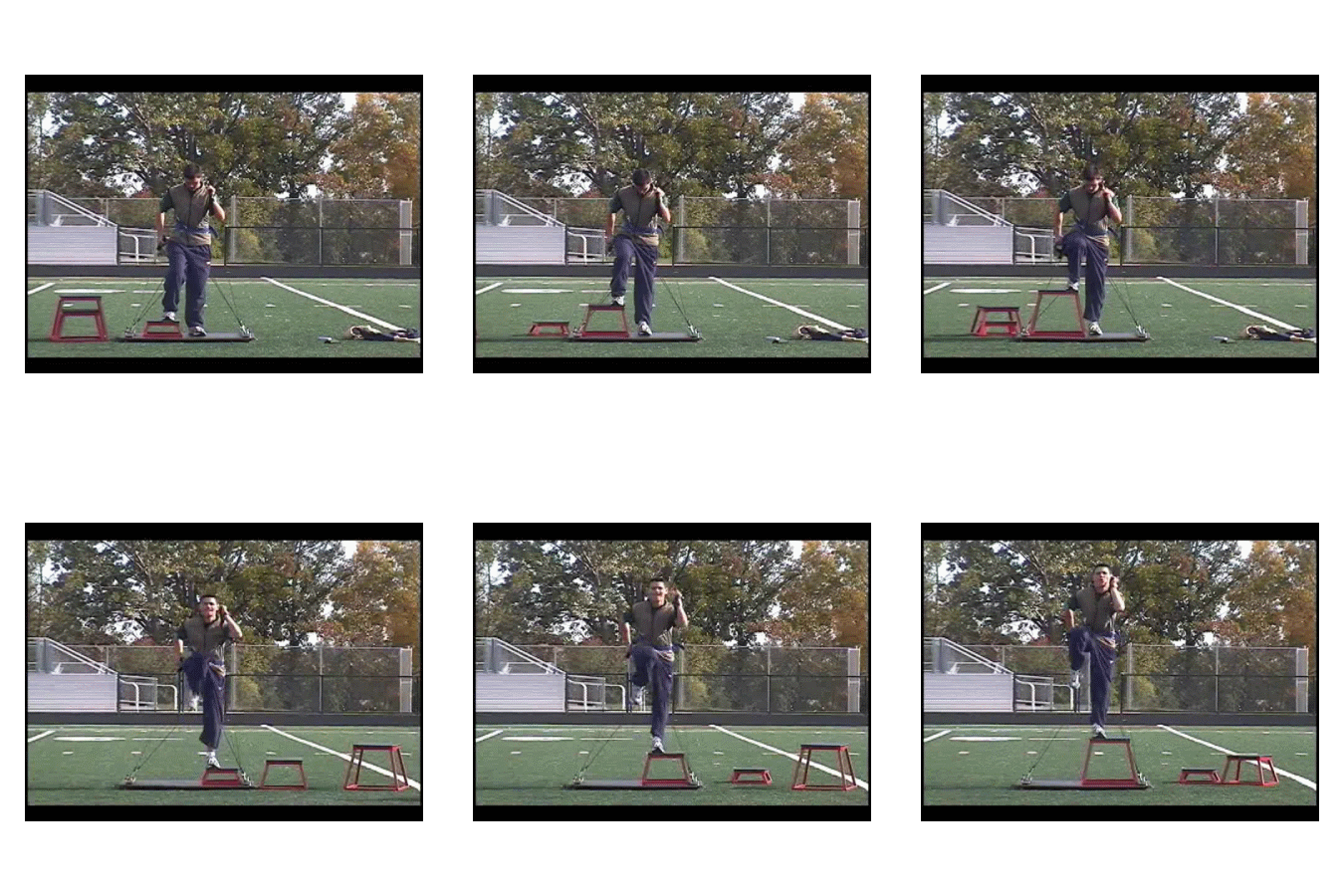
Exercising one leg at a time
is a truer representation of how force is applied to the leg during the
execution of a sport. It is not uncommon for one leg to endure forces
as high as three to five times your body weight in a sporting
activity.
|








 (1)
Toe Raise Block
(1)
Toe Raise Block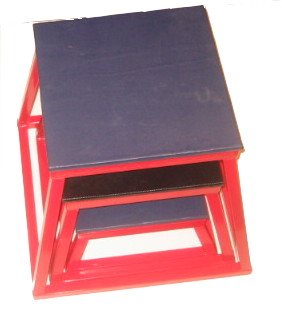 Plyo Boxes 6, 12, 18

